Tuesday, February 28, 2023

Everybody Had A Story


Nearing the end of our 14-day cruise, the fellow that had been presenting talks on Mississippi River and American History talks, gave a genealogy talk (and he was good). Afterwards, he invited us in the audience to share our genealogy stories. I was stuck by the enormous variety!

I told my Mathew Potter and the Chicken story..... to howls of laughter. 

Mr/Mrs Bodmer told how they hoped to find the connection between them and the famous Western American painter, Carl Bodmer, but hadn’t yet.

One great-great-grandfather came from Germany, landed in New Orleans, and WALKED up to Wisconsin to live out his life.

One Vietnam veteran told how he flew P3s (submarine hunters) during his Navy career.

One lady told of her sailor, born in the Pyrenees,  who jumped ship in New Orleans, went to Texas with his native wife. When he died, she married another Texas rancher.

One man told how his great-grandfather hid his Comanche wife from the census taker. Can only guess what his reasons were.

“We’ve been in American for fourteen generations, since 1636,” one man boasted.

This was, to me, the saddest story:  A Jewish couple told how her Jewish ancestors were living kosher in San Francisco until the 1906 earthquake when they lost everything, business, home and synagogue, everything.  All the Army had to feed people with was pork and beans. "That must have been so very hard for them," she said.

This quite proves that everybody with ancestors (!!!!) has a good story. 

Friday, February 24, 2023

Mississippi River's Worst Disasters


 The New Madrid Earthquake of 1811  --  The area known as New Madrid was, in 1811, a ways upriver and was sparsely populated. After the Revolution, people were flocking west, crossing the Appalachian Mountains, but blessedly there were few settlers in the New Madrid area in 1811.  So what happened?

On 16 December 1811, at 2:15 am, not one but THREE magnitude 8.0 or higher shook the area in that one day. In January 1812, there was another big shake, followed in February by a last 8.8 shock. Church bells rang as far away as Charleston, South Carolina, and Boston. These four big quakes in a three month period happened because “a seam between two plates pulled apart,” explained our presenter. “And the quakes continue to today…. There have been 4000 quakes recorded since 1974! And if and when another big one comes, the entire Midwest will be in big trouble,” he mused.

The Sultana disaster of 1865  --  In the early morning hours of 27 April 1865, mere days after the end of the Civil War, the side-wheeled steamboat Sultana burst into flames, taking 1169 people….mostly Union soldiers (newly freed from Anderson Prison in Georgia) returning home. This was the worst maritime disaster in U.S. history.  So what happened?

The ragged band of paroled Union soldiers was taken by train from Andersonville to Vicksburg, Mississippi. There, the steamboat Sultana was to take them north and home. The Sultana was moored there in Vicksburg needing to replace a faulty/leaking boiler. The captain was offered a bounty (bribe!) for each man he would take upriver so he ordered the ailing boiler to be patched up and loaded up the men. Built to take 375 passengers and crew, the wooden Sultana had regularly ferried cotton between St.Louis and New Orleans; she was only two years old. The greedy captain (sorry, called it what it was) loaded nearly 2130 souls on board and pushed off into the river. (1953 freed prisoners, 22 guards, 70 fare-paying passengers and 85 crew.) The Sultana spent two days pushing upriver against the worst spring floods in the river’s history.  At around 2:00am on 27 April 1865, when the ship was about seven miles north of Memphis, three of its four boilers suddenly exploded. (If you want to read all the grizzly details click to Wikipedia.) All in all, some 1169 people perished that dark night. “Greed killed them all,” our presenter opined. “And no charges were ever filed against anyone.”

The Flood of 1927  --  The third worst disaster was the Flood of 1927.  Aaron taught us: “That year, we learned the hard way that men had to live with the Mississippi River on her terms. The river drains 40% of the American heartland and as many smaller rivers flow into the Mississippi, the river becomes like a great big funnel and that year, 1927, after heavy spring rains, the “funnel” opened flooding 27,000 square miles.” This was the most destructive river flood in U.S. history. All those miles of land were inundated up to 30 FEET deep over the course of several months in early 1927. About 500 people died and over 630,000 were directly affected. Some 200,000 African Americans were hit hardest; they were poor and unable to pick up and leave in contrast with the “richer white folks” many of whom could and did pick up and leave. 

Levees along the Mississippi were recognized as needed by the 1820s and work was begun to construct them. Long story short, in the early years they were not properly constructed and continually were breached or broken by the tremendously rushing flood waters. Floods still happen today despite much better engineering.  

Any of you, dear readers, have an ancestor who was involved or impacted by one of these disasters?  

Tuesday, February 21, 2023

America's Westward Migration

 The time: during the period between the Revolution and the Civil War.  Cruise-history-presenter, Aaron, shared his insights on this part of American history.

What was the political reality of the world at that time? Only a handful of men ruled the entire of Europe. These kings had the absolute right to claim entire continents in their name…. or explorers would claim it in their name. This is hard to comprehend today.  France claimed and owned the entire Mississippi River basin. England had the entire of New England. Spain claimed and owned most of the southwest and Florida. Men could not just legally settle anywhere they wanted (squatters exempted).

The stage was set for a civil war when Plymouth and Jamestown were first settled, due to the inherent differences in the men. (The book Albion’s Seed explains this beautifully.)  It took the settlers of Jamestown a long while to realize that they needed to focus on staying alive; forget about finding gold; they had to work, and work together, to stay alive even though they were “gentlemen” and this did not come easy for them.  Biggest problem with Williamsburg, was the old monarchial system into which Williamsburg fell, unfortunately. It was way too top heavy with gentlemen and rulers and not enough workers. Finally all settlements realized that survival tops heredity.

After the Revolution, and as the population increased and begin to spread westward, the biggest draw was water; towns began where there was water. Once in a spot, the settlers began clearing the land for crops; this was all important for survival. A place to live was secondary and the earliest of homes were dirt-floored-leaky-roofed-tiny huts. As the men began to cut down trees for land clearing, for homes and fences, they realized that the very biggest trees were nearly impossible for them to handle. So these giants were just girdled and left to die or felled and burned. Trees of most other sizes were used. Of course a number one building was the outhouse. In the beginning, both family and animals lived in one dwelling; soon barns began to spring up.

Eventually the first tiny structure was added onto, and added on to again and again. This is how many of our ancestors did it, started small and worked up to a decent home in fifteen years.  A fireplace was added as soon as possible, followed by a porch where most of the daily activities took place. Many of the historic homes still today show the evidence of this building-step-by-step.

Aaron, the presenter, went into more details and the where-when-why-hows of frontier settlements but overall he emphasized that “America was settled step by step…California became a state in 1850 only due to gold but there was a big empty gap in the middle, just waiting.”

P.S. I 100% recommend Albion's Seed as the best book on understanding English emigration to America that you will ever read. Or listen to. Donna

Friday, February 17, 2023

Weyerhaeuser: Iowa To Washington

 We here in the heavily timbered land of the Pacific Northwest have certainly seen and heard the name of Weyerhaeuser Company and know it has something to do with the timber and lumbering industry. We’d never have guessed that Frederick Weyerhaeuser (1834-1914) began his company in the Mississippi River town of Davenport, Iowa, but he did.

The company was founded in 1900 by Frederick Weyerhaeuser who had emigrated to the U.S. from Germany when he was 18. He worked first as a laborer in Erie, Pennsylvania, where he met and married Elisabeth Bladel. In 1856, the young couple moved to Rock Island, Illinois (across the river from Davenport). Weyerhaeuser found work in a sawmill and lumber yard, eventually becoming foreman and arduously began saving his money. Weyerhaeuser was a workaholic and by the mid-1860s he had purchased the mill and was buying pine tracts in Wisconsin, expanding into Minnesota, Idaho, Oregon and Washington.

By 1903, Weyerhaeuser owned more than 1.5 million acres of land in Washington even though he kept his residence in St. Paul. He was survived by seven children; his son, John P. Weyerhaeuser, succeeded him as president of the company. Demands for lumber during World War I led to a substantial increase in the company’s business. The military demand for lumber was so high that the Army sent soldiers to work as lumberjacks in Weyerhaeuser’s forests to increase production. By 1941, industry executives joined John P. Weyerhaeuser and Washington Gov. Arthur Lang in dedicating the nation’s first tree farm near Montesano.

And it all started with a hard-working German immigrant in a small Midwestern town.

(Thanks to www.historylink.org for the information on Weyerhaeuser.)  If you want all the details of his life, click to Google.

Tuesday, February 14, 2023

Midwest Icons: John Deere & Spam


No matter where in the world you live, and certainly in America, you'd recognize the "Nothing Runs Like A Deere" logo. 

John Deere was born in 1804 in Vermont and moved to Illinois in 1836 and began manufacturing tools. He made pitchforks, shovels and plows. In those days, a product was not made until ordered, which was a very slow business model. By 1857, the company was manufacturing a variety of farm equipment; that year their sales reached 1120 implements per month. John Deere as an American business icon was off and running.  

There are three main John Deere museums (Waterloo, Iowa) and a big selling item these days are the John Deere tractor toys.

SPAM is another iconic midwestern product. I always thought the letters stood for "Special Processed American Meat," meat that was portable and sent to the troops in Europe during WWII. Not quite, as it turns out. 


SPAM is a brand of cooked pork introduced by Hormel in 1937. The origin of the name is not fully documented (so maybe I'm right?).  SPAM was a lifesaver to U.S. soldiers in Europe because of the difficulty in having fresh meat for the soldiers on the front lines. Some 150,000,000 pounds of SPAM was purchased by the military before war's end. Nowadays SPAM can be found on grocery shelves in 41 countries.


When was the last time you had fried SPAM? SPAM and eggs? A SPAM sandwich??

Friday, February 10, 2023

Pirates On The Mississippi River?

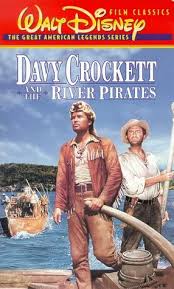
 When you imagine a pirate, Johnny Depp might come to mind. The Mississippi River pirates were real but they weren't as colorful as Johnny depicted.  Between about 1806 and 1844, there certainly were pirates prowling on the Mississippi River. Any of you remember this Walt Disney movie:

I had no idea there were pirates on the Mississippi and when the ship's education guy told about these fellows, I was really surprised. I never learned about this before! River pirates have operated along rivers all over the world. Quoting from Wikipedia:


 "American river piracy in the late 18th and mid-19th century was primarily concentrated along the Ohio River and Mississippi River valleys. River pirates usually operated in isolated frontier settlements which were sparsely populated areas lacking the protection of civil authority and institutions. These pirates resorted to a variety of tactics depending on the number of pirates and the size of the boat crews involved, including deception, concealment, ambush and assaults in open combat near natural obstacles and curiosities, such as shelter caves, islands, river narrows, rapids, swamps and marshes. River travelers were robbed, captured and murdered, and their livestock, slaves, cargo and flatboats, keelboats and rafts were sunk or sold downriver."


Did your ancestor float down the Ohio or Mississippi Rivers and were they attacked by pirates?

What a story!

Tuesday, February 7, 2023

Rock Island Arsenal & Chief Blackhawk

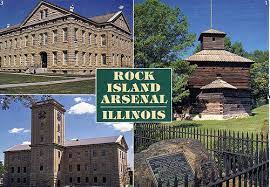
 When our cruise ship was near Davenport, Iowa, I learned about the Rock Island Arsenal. I had heard about the Black Hawk War but had no idea that disputes over ownership of this place sparked that conflict. 

Located on an island in the Mississippi, it was established as a government site in 1816 first as a defensive fort and then, in the 1880s, a government-owned weapons manufacturing arsenal in the U.S. Still in use, and even as being designated as a National Historic Landmark, the arsenal still produces ordinance (bullets), artillery, gun mounts, small arms, aircraft weapons sub-systems, grenade launchers and a host of associated components. Some 250 military personnel work there along with 6000 civilian workers. 

Back to the Black Hawk war.  In his autobiography, Black Hawk wrote: "When we arrived (to our tribal summer camp) we found that the troops had come to build a fort on Rock Island...We did not object, however, to their building their fort on the island, but were very sorry, as this was the best one on the Mississippi, and had long been the resort of our young people during the summer. It was our garden, like the white people have near their big villages, which supplied us with strawberries, blackberries, gooseberries, plums, apples and nuts of different kinds." 

Did you know that Abraham Lincoln served in the Illinois Militia in 1832 in this conflict....."he never saw action."

Last but not least, Rock Island holds a Confederate cemetery; nearly 2000 prisoners, including Union Colored Troops who served as guards, are buried there. 

AND, last of all, the Rock Island Arsenal Museum was established on July 4, 1905. It is the second oldest US Army Museum after the West Point Museum. 

Think of all the Jeopardy trivia you just learned!  :-)