Friday, December 16, 2022

Sears Catalogs From Days Of Yore: 1897


Bust cream or food for only $1.46? " unrivaled for developing the bust, arms and neck, making a plump, full, founded bosom, perfect neck and arms, a smooth skin which before was scrawny, flat and flabby." 


You could have your very own sewing machine for only $22.50! Note that it was a foot-powered model but it did come with a 10-year guarantee!


Only $39.90 for a Michigan A Grade Family Wagon.... "we must sell 1000 of these vehicles before the close of the season." And a 3% discount was offered if you pay in full with your order. Horses not included. 


"The Most Stylish Suit Ever Sold!" The dresser has a fancy pattern shaped mirror, 30x36 inches in size. All drawers are fitted with fancy brass handles. The bed stands 
6-feet high and 4'6" wide (full size today width is same), and is made from the choicest quarter-sawed oak. The footboard is one solid piece......  all three of these pieces, plus a washstand (not pictured) would set you back $59.00. Imagine! 


Tuesday, December 13, 2022

Remember The Sears Christmas Wish Book?


How many of us remember drooling over the pages of the Sears catalog Christmas Wish book? I do!

The first Sears Christmas Book debuted in 1933 and came in the mail for 60 years, until 1993 (when Sears went totally out of the catalog business). 

Through the decades, the items offered varied. In 1937, tractor sets and Shirley Temple dolls were offered. By 1949, Western TV shows and movies exploded and the book offered a wide variety of Roy Rogers inspired gifts and even school supplies. As America entered the space race in 1968, children everywhere dreamed of becoming an astronaut. Marking America's Bicentennial in 1975, nostalgic theme toys appeared: fife and drum sets, Colonial dolls and models of the USS Constitution.  Transformers exploded on the scene in 1984. 

What likely did your grandparents or parents or YOU order from the Sears Christmas Wish Book???

Friday, December 9, 2022

Want A Picture Of The Ship Your Ancestor Came On?


Then www.shipindex.org is the website for you to find that image!!  I know the copied image above is fuzzy but the first paragraph says it all:

"ShipIndex.org simplifies vessel research. Whether you're a genealogist, a maritime historian, a researcher, or just curious, we can help you learn more about the ships that interest you. We tell you which maritime resources, such as books, journals, magazines, newspapers, CD-ROMS, websites and online databases mention the ships that interest you. We enhance these references by noting which ones include illustrations or crew and passenger lists and where you can find or purchase the resource."

You can barely see that "our full database had 3,151,517 citations to ships in 1004 resources."

You can do a quick first index search for free but you'll need to subscribe to view the citation............. a whopping $6.00 for two full weeks. 

From the Mayflower to the Titanic to the Queen Mary this website will delight you and enhance your family history stories, I guarantee.

Tuesday, December 6, 2022

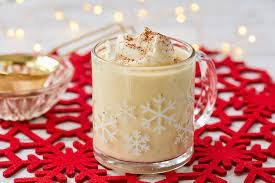
A Dangerous Eggnog


"The hens only lay egg-nog at Christmas-tidek but egg-nog will lay a man any time he tackles it," reported the Idaho Avalanche on January 3, 1880. In 1881, The Herald, in Omaha, Nebraska, also found eggnog a subject for humor:  "Hens favor sobriety. They generally quit laying when the egg-nog season approaches."

Big thanks to a decades-old issue of True West magazine for this December-timely article, penned by Sherry Monahan. 

Out on the frontier, eggnog was not just a holiday beverage, but also a saloon drink year-round. In 1881, eggnog was ranked as the eighth most popular saloon beverage and it was served hot or cold. 

Here is the recipe for Victorian eggnog, adapted from the Idaho Daily Statesman
12 Dec 1892:

                    3 eggs, separated
                    1 cup powdered sugar
                    1 1/2 cups cream
                    1/4 tsp nutmeg
                    1 TB powdered sugar for egg whites
                    1/4 cup brandy and rum
                    1 cinnamon stick for grating

                    Beat the egg yolks and sugar; set aside. Beat egg whites with 1 TB sugar until stiff and refrigerate. Heat cream and nutmeg to just a boil, stirring occasionally. Remove from heat and gradually add hot cream mixture into the egg and sugar mixture. Return everything to the pan and cook until the mixture reaches 160oF. Remove from heat, place in bowl, set in 'fridge to chill. Fold the egg whites into the mixture when serving and served with grated cinnamon and nutmeg.  Serves 2

Too much work for me! I'll just go to Safeway or Rosauer's thank you very much. Bet you will too. 


Friday, December 2, 2022

Washington, World War I Veteran's Compensation Fund Applications


Bet you've never heard of the World War I Veteran's Compensation Fund for Washington state veterans of the "war to end all wars."

These are now to be accessed in FamilySearch.org and are a Department of Veterans Affairs bonus record set. World War I veterans could apply for compensation from the state of Washington between 1921-1925. 

The World War Adjusted Compensation Act, or Bonus Act, was a U.S. federal law passed on 19 May 1924, that granted a benefit to veterans of American military service in World War I.  The value of each veteran's "credit" was based on each recipient's service between 5 Apr 1917 and 1 Jul 1919, with $1.00 awarded for each day served in the U.S. and $1.25 for each day served abroad. The maximum payment was set at $500.00. 

To search this collection (on FamilySearch), it is helpful to know the name of the soldier and the state where he enlisted.

I, too, have questions. Was this a U.S.-wide program? Which paid, the federal government or the state government? 

If you wish to know more, click to the FamilySearch WIKI and then Washington (state).  Also click to Wikipedia for the World War Adjusted Compensation Act. 


Tuesday, November 29, 2022

Herbert Franklin Niccolls, Jr. Prison Inmate At Age 12 in 1931


Jarred by an old newspaper article, I had to dig into the sad story of Herbert Franklin Niccolls, Jr. Most of this information comes from Find-A-Grave. 

Born in 1919 in Boise, Idaho, to Bert and Hazel Niccolls, he was one of the younger children. The family lived in extreme poverty. When Herbert was 9, his father was declared insane and committed to an asylum. Hazel, with no other recourse, gave away her sons. 

Herbert was incorrigibly delinquent. The loving foster parents who took him in had to send him away after he repeatedly lied and stole from them. Herbert finally was released into the care of his paternal grandmother "a religious zealot who was determined to starve and beat the sin out of him."

On the night of 5 Aug 1931, 12-year-old Herbert broke into a store for candy and tobacco. The break-in was discovered and 73-year-old Sheriff John L. Wormell entered the store to investigate. Herbert, crouched behind a vinegar barrel with a stolen gun, fired one shot, hitting the sheriff in the head and killing him instantly. 

The arrest of the 12 year old killer, barefoot and dressed in ragged overalls, made headlines across the country. He was convicted and sentenced to life in prison. Herbert, 80 pounds, 4 foot 8 inches, with delicate features, curly brown hair, bright and polite, became a poster child for reform of the incarceration of juveniles. 

Herbert fared fairly well in prison. He was kept under close supervision of the wardens, kept away from the general population and assigned tutors and mentors, and achieved a good education behind bars. He remarked to his brother many years later that prison saved his life.

Herbert was released from prison at the age of 21. After a brief, unsuccessful start at a bakery job just after his release from prison, Niccolls worked in the accounting department of a Tacoma shipyard and there he excelled. He subsequently moved to California and joined the accounting department at MGM and later worked for 20th Century Fox in Hollywood. He married and had a son, John.  

Herbert died of a heart attack in 1983, having lived a crime-free life since his parole 42 years earlier.

Friday, November 25, 2022

Montana's Silver Dollar Bar


Everybody stops there; the gravity and allure of the place (not to mention clean restrooms) pulls you in right off of I-90 if you're on your way east from Washington state.  You've been there, right? Probably more than once!

Here's the history of the famous bar:  The story begins in 1951 when Gerry and Marie Lincoln moved from Libby, Montana, to Alberton, Montana. Two miles west of this small Montana town on what is now I-90, they built a small bar and named it "Cherry Springs." Soon, however, they realized that people needed a reason to stop, an attraction, and they got an idea.

At that time the local customers (loggers and miners) were paid in silver dollars. Also, travelers to Montana always received their change in silver dollars. They weigh a ton in your pocket! (This is why loggers wear suspenders.) So on October 1, 1952, Gerry cut a round hole in the bar top, hammered a silver dollar into it, and inscribed he and Marie's names beneath it. 

The idea caught on and by December 1953, over 2000 people had placed their coins and names in the bar top. As a result of this, the name was changed to Lincoln's 2000 Silver $ Bar. The original bar top is still intact and in use. It contains 2115 pieces and all the other coins in the collection are embedded in boards and displayed around the barroom. Each coin is the possession of the individual who left it and many people, or their children or grandchildren, return year after year to visit "their" coin. 

Today, according to their website, there are over 75,000 silver dollar coins on display! If you haven't, maybe you ought to stop on your next trip east.